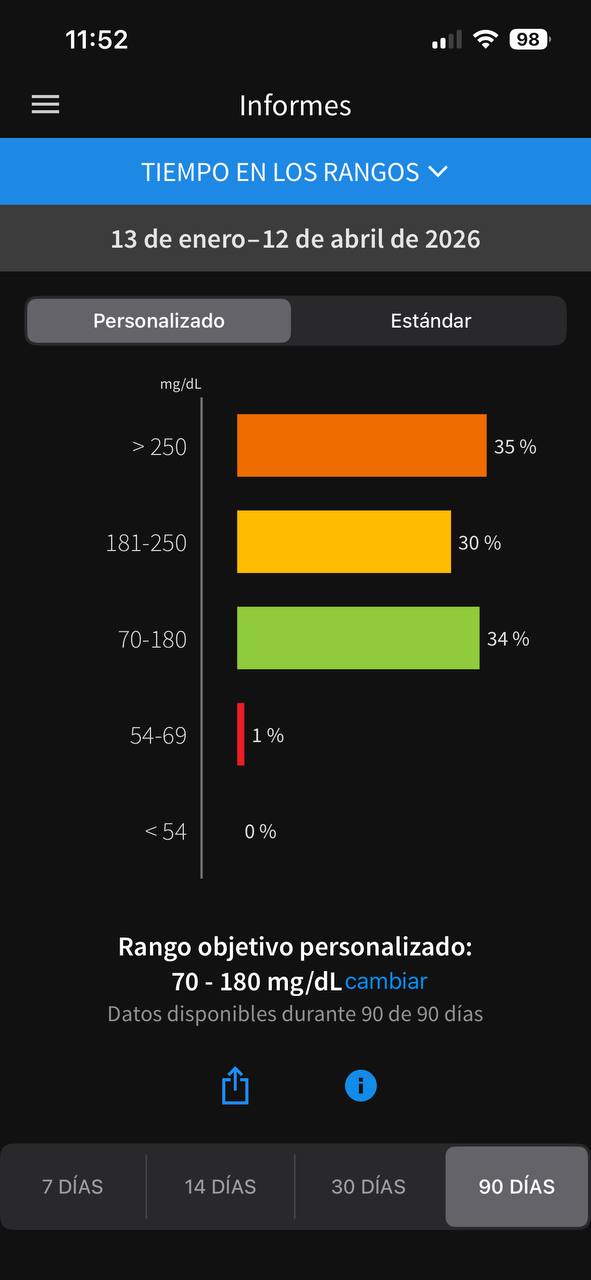
You can do almost everything 'right' and still watch your CGM drift high after breakfast, dip during a walk, or turn unpredictable at 3 a.m. That is why learning how to improve time in range is not about chasing perfect numbers. It is about reducing the number of avoidable misses by understanding what your glucose is about to do, not just what it did 20 minutes ago.
For people with Type 1 diabetes, time in range is not a vanity metric. It is a practical measure of how often your day feels manageable. More time between 70 and 180 mg/dL usually means fewer corrections, fewer interruptions, less decision fatigue, and less anxiety about the next alarm. The goal is not perfection. The goal is more stable hours, with fewer surprises.
What actually moves time in range
Time in range improves when your insulin, food, movement, stress, sleep, and routine work together more often. That sounds obvious, but most glucose problems come from mismatch. Insulin hits too late for the meal. A correction stacks on top of active insulin. Exercise changes sensitivity faster than expected. Hormones shift your baseline and yesterday's settings suddenly stop working.
That is why broad advice like 'count carbs better' is only partly useful. Technically correct, yes. But if your toughest issue is late post-meal insulin action, dawn phenomenon, or overnight lows after evening activity, carb counting alone will not solve it. A better question is this: where are you losing range right now? For most people, the answer falls into one of three buckets. You are spiking after meals, dropping low from insulin stacking or activity, or running high for hours because background insulin or correction strategy is off. Once you know which pattern dominates, you can make targeted changes instead of constantly reacting.
How to improve time in range at meals
Meals are where many users win or lose the day. If your CGM rises sharply one to two hours after eating, the issue is often timing as much as dose. Even an accurate carb estimate can miss if insulin starts working after the glucose surge is already underway.
Pre-Bolus Timing for 4 Types of Meals
Match insulin timing to high-glycemic, mixed, high-fat, and morning meals so the insulin peak lines up with the glucose rise.
Pre-bolusing helps, but the exact timing depends on the meal, your starting glucose, and how fast your insulin works in your body. A high-glycemic breakfast usually needs earlier insulin than a mixed dinner with protein and fat. If you start at 90 with a downward trend, waiting may be safer. If you start at 160 and flat, delayed insulin is more likely to cost you range.
Food composition matters more than many apps admit. Pizza, takeout, desserts, and high-fat restaurant meals can produce a long rise that outlasts your first bolus. In those cases, your glucose may look fine early and then climb later. If that pattern is common, the fix may involve split dosing, extended bolus strategies if you use a pump, or a more deliberate correction plan rather than one aggressive upfront dose. Breakfast deserves special attention. Many people are more insulin resistant in the morning, and the same carb amount that works at lunch can hit very differently at 7 a.m. If breakfast is your daily spike window, treat it as its own problem. Different ratio, different timing, different meal structure. You do not need one universal rule for every meal.
Watch the trend, not just the number
A glucose of 140 means one thing if it is steady and another if it is climbing fast. Trend arrows can tell you whether your current plan is working before the full rise or drop appears. That matters because waiting for the number alone often means acting late.
The best meal decisions are contextual. What are you eating? Are you sitting at your desk or heading out for a walk? Do you still have active insulin on board? Is this a normal day or a high-stress, poor-sleep day when insulin sensitivity is off? Better time in range comes from answering those questions quickly and consistently.
Fix the lows that steal the next six hours
Many people focus on highs because they are visible on the graph. But lows often wreck time in range twice. First with the low itself, then with the rebound from overtreating it.
If you keep dropping low, look at the setup, not just the rescue. A low before lunch may come from an overaggressive breakfast bolus, a morning correction that was still active, or an unusually active commute. An overnight low after a gym session might point to delayed exercise effects rather than a bedtime mistake.
Treating lows with the right amount also matters. When you are shaky, hungry, and annoyed, it is easy to eat like the floor dropped out. Then you spend the next two hours above range, correcting again, and the cycle repeats. If you can pause long enough to treat based on severity and trend, you often protect more of the day.
Meal Logging for Type 1 Diabetes
Why a static logbook tells you what happened, but misses the context that actually caused the low.
Basal and background patterns matter more than people think
If your glucose drifts up or down without meals in the picture, basal insulin may be part of the issue. That does not mean every rough day is a basal problem. Stress, illness, menstrual cycle changes, and sleep disruption can all create temporary shifts. But if the pattern repeats in similar conditions, it is worth attention.
A good example is dawn phenomenon. If you wake up in range and rise before breakfast on most mornings, your overnight settings may not match your early-morning needs. The same goes for persistent afternoon highs or bedtime drops that show up on otherwise ordinary days. The trade-off is that changing background insulin can help one part of the day and hurt another if the pattern was misread. That is why one isolated bad graph should not drive a permanent adjustment. Repeated pattern, similar conditions, clear timing — that is the standard.
Exercise can improve time in range or break it
Movement is one of the fastest ways to change glucose, and one of the easiest ways to get surprised. A casual walk after dinner may flatten a spike. A hard interval session may raise glucose during the workout and drop it later. Strength training, cardio, and mixed training all affect insulin sensitivity differently.
If exercise keeps knocking you out of range, stop treating it as one category. Time of day, intensity, insulin on board, and recent food all matter. A lunchtime run with active bolus insulin is not the same as lifting weights three hours after dinner. If you want better time in range, your workout strategy needs to be specific, not motivational.
The same is true for delayed lows. Evening activity can look fine at first and then trigger overnight risk hours later. That does not mean you should avoid exercise. It means your glucose plan needs to extend beyond the workout itself.
Sleep, hormones, and routine are not side notes
This is where many diabetes tools fail. They treat glucose as if it exists in a vacuum. It does not. Poor sleep can make you more insulin resistant the next day. Stress can keep you elevated even when your carb count was accurate. Hormonal shifts can change your response to the exact same dose and meal.
For women with Type 1 diabetes, cycle-related variability can be especially disruptive. If your insulin needs predictably change by phase, that is not randomness. That is a pattern worth planning for. The same goes for pregnancy, shift work, travel, alcohol, and periods of intense training. Better time in range comes when those factors stop being treated like exceptions and start being built into decision-making.
How to improve time in range without burning out
The mistake is trying to fix everything at once. You do not need a complete diabetes overhaul this week. You need one high-value pattern and a tighter response to it.
Start with the glucose problem that happens most often or causes the most disruption. Maybe it is the breakfast spike, the overnight drop, or the late-afternoon rise that ruins dinner. Track that one pattern closely for several days. Look at timing, active insulin, food type, activity, and routine. Then make one change that matches the actual problem.
That might mean earlier meal insulin, a different breakfast ratio, a more disciplined low treatment plan, or a workout adjustment on days with more insulin on board. Then reassess. If the pattern improves, keep going. If it gets worse or creates a new problem, pull back and refine. More time in range usually does not come from trying harder. It comes from making fewer blind decisions, especially in the moments that repeat every day.
Ready for Your AI Diabetes Agent?
Open-D is the AI Diabetes Agent that watches your glucose 24/7, learns your patterns, and alerts you before problems happen.
Get Your AI Diabetes AgentLibre 3 · iOS & Android · Join the waitlist